The 2025–26 season has concluded, and results and electronic certificates have been distributed. The exact dates for the next edition are pending official announcement. Many families with younger participants often have concerns about award rates, cross-grade same-paper fairness, and visual-verbal question traps.
This article analyzes the award rate and value of Kangaroo Math, examines the fairness of using the same paper across grades, provides methods for training on question traps, and explains how to use sample questions effectively.
The following is based on historical cycles; all details are subject to official notifications from the China region.
Phase
Timing
Notes
Registration
Typically January–March each year
Registration channel opens; select the corresponding Level paper by grade. Cross-level registration is not allowed.
Official Exam
Typically April each year
75-minute exam, all multiple-choice questions. Calculators are not permitted.
Results and Certificates
Usually 4–6 weeks after the exam
Rankings are calculated independently by level. Electronic certificates are issued, and some levels include Global Achievement Awards.
II. Award Value, Same-Paper Fairness, and Trap Training
Kangaroo Math emphasizes mathematical thinking and fun; it is not a high-difficulty Olympiad competition. Its evaluation logic differs from traditional contests.
How to View the Value Despite the High Award Rate
The overall award rate is relatively high, but Super Gold and Gold medals are scarce. Lower-tier awards primarily signify participation.
The competition is positioned as an interest-based introduction to mathematics, suitable for young primary school students to gain competition experience. It is not a proof of elite Olympiad ability.
For overseas applications, it serves only as supplementary background. It does not add points for domestic admissions and should not be equated with high-difficulty math competitions.
The key to assessing value is the award tier, not merely the fact of receiving a certificate.
Fairness Analysis of Using the Same Paper Across Age Groups
The same Level paper allows a slight grade range, but rankings are calculated only within that level. Scores are not compared across grades.
Older students who take a lower-level paper may have a knowledge advantage, but the official policy does not encourage this practice.
Same paper does not mean same ranking pool. Final awards are based solely on comparisons with other candidates at the same Level.
It is recommended to choose the paper corresponding to your actual grade. Even if you win by taking a lower-level paper, the value of that award is significantly diminished.
Targeted Training Methods for Verbal and Visual Traps
When solving problems, force yourself to circle or underline conditions in the question, paying special attention to negative words, limiting numbers, and chart legends to avoid misreading.
For chart-based questions, do not rely solely on visual intuition; always cross-check with the text description, as images may contain visual misleading traps.
Maintain an error log for visual-verbal questions, distinguishing between "lack of knowledge" and "misinterpretation of the question," and focus on reviewing the latter.
Repeatedly practice with official sample questions and past papers to become familiar with Kangaroo's unique story-based and visual question style.
III. Award Levels and Guide to Using Sample Questions
Awards are ranked independently for each Level; scores between different Levels are not interchangeable.
Award Level
Description and Sample Question Notes
Super Gold
Top 3% in each Level; the highest award in the China region.
Gold/Silver/Bronze
Top 10%, 20%, and 35% respectively in each Level; awards are determined independently by level.
Math Skills Award
Top 55% in each Level; a participation-based foundational award.
Using Official Sample Questions
Download the sample questions for your Level, take them under timed conditions, and focus on practicing question types that combine text and visuals. Do not only work on difficult problems.
Participants and Important Notes
Participants: Students in grades 1–12, divided into 6 Levels, strictly matched to their current grade.
Exam Format: Online or offline written test; all objective multiple-choice questions; no subjective long-answer questions.
Key Preparation Materials: Official sample questions and past papers; focus on training the ability to read questions and extract information from visuals.
Purpose of Certificates: To foster mathematical thinking; can be listed as an extracurricular activity, but does not add points for domestic admissions.
The above is for informational purposes only. For specific competition dates, award rules, and paper levels, please refer to the official documents from Kangaroo Math China.
Mathematics is often experienced as a solitary pursuit. Students sit at desks, work through problems alone, and receive individual grades that compare them against their peers. This isolation is one of the most overlooked factors in the widespread anxiety and disengagement that characterize mathematics education. Yet mathematics does not have to be lonely. When families engage with mathematical thinking together, when parents and children sit side by side exploring a puzzle, discussing a strategy, or celebrating a solution, mathematics becomes a shared experience, a source of connection rather than division, and a foundation for a relationship that is enriched by intellectual partnership.
Math Kangaroo, the world’s largest international mathematics competition, provides a uniquely powerful context for this kind of parent-child mathematical partnership. The competition’s design, its emphasis on creative thinking over procedural speed, its accessible yet challenging problems, and its culture of participation and celebration, makes it an ideal vehicle for families to explore mathematics together. For millions of families around the world, Math Kangaroo has become not just a competition but a shared activity that brings parents and children closer through the joy of mathematical discovery.
This article explores the power of the parent-child learning partnership in mathematics, examines how Math Kangaroo facilitates and strengthens this partnership, and considers why family engagement in mathematical thinking is one of the most powerful forces in a child’s mathematical development.
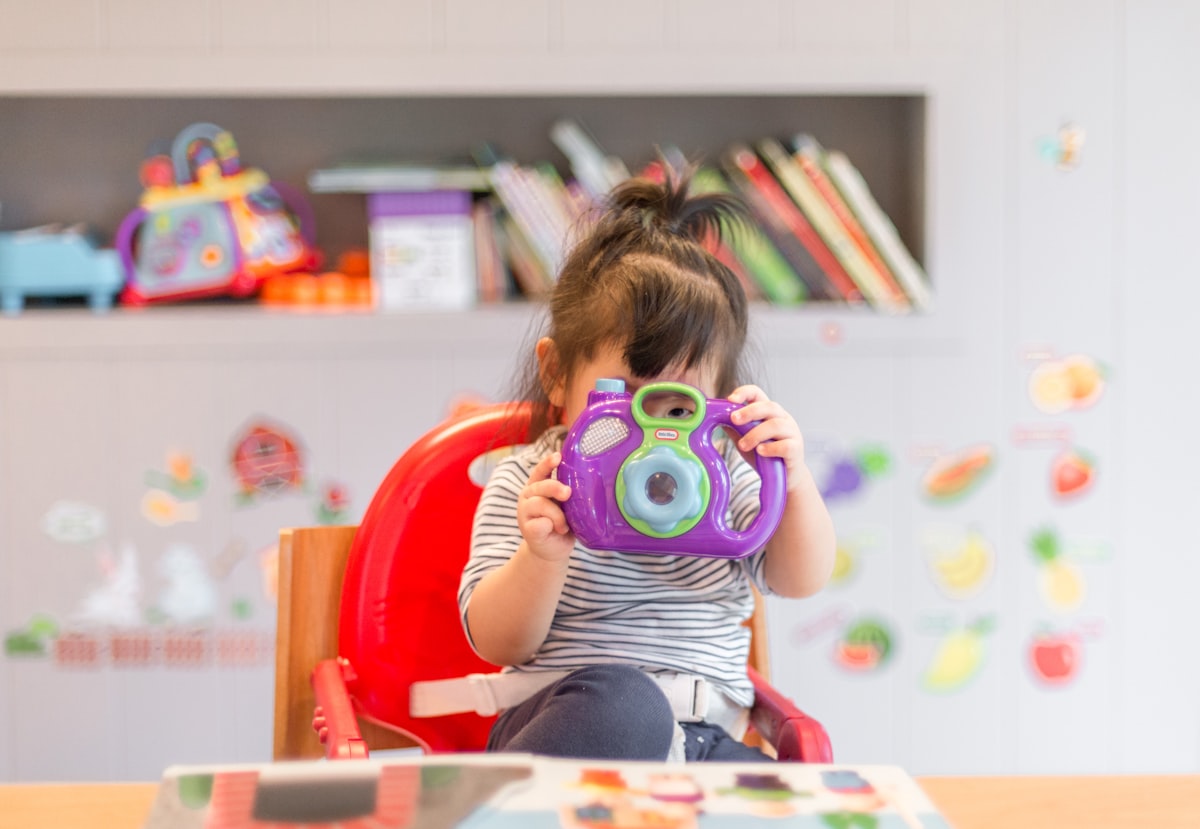
Shared mathematical exploration transforms mathematics from a solitary struggle into a source of family connection and joy.
The Power of Parental Involvement in Mathematics Education
Decades of educational research have established that parental involvement is one of the strongest predictors of children’s academic success. Students whose parents are actively engaged in their education achieve higher grades, have better attendance, develop stronger motivation, and are more likely to pursue advanced coursework. This effect is particularly pronounced in mathematics, where parental attitudes and behaviors have a direct and measurable impact on children’s achievement and attitudes toward the subject.
However, mathematics presents a unique challenge for parental involvement. Many parents feel anxious about their own mathematical abilities, and this anxiety can be transmitted to their children, creating a cycle of mathematical insecurity that spans generations. Research has shown that when parents express negative attitudes about mathematics or communicate helplessness when confronted with mathematical problems, children internalize those attitudes and underperform relative to their potential. The challenge, then, is not simply to increase parental involvement in mathematics but to create contexts in which that involvement is positive, supportive, and effective.
Math Kangaroo addresses this challenge with remarkable effectiveness. The competition’s problems are designed to be accessible to adults who may not have strong mathematical backgrounds while still being genuinely interesting and challenging. A parent who has not studied mathematics since high school can engage with a Level 1 or Level 2 Math Kangaroo problem, can discuss it with their child, and can experience the satisfaction of solving it together. This shared experience of success is profoundly transformative, breaking the cycle of mathematical anxiety and replacing it with a cycle of shared mathematical confidence.
How Math Kangaroo Facilitates the Parent-Child Mathematical Partnership
The structure and culture of Math Kangaroo create natural opportunities for parent-child mathematical engagement that are rare in traditional educational settings. Several features of the competition make it particularly well-suited for family involvement.
Problems That Invite Conversation. Math Kangaroo problems are designed to be thought-provoking rather than merely computational. They present situations that invite discussion: What is the problem really asking? What strategy might work? What if we tried a different approach? These are questions that parents and children can explore together, and the conversation itself is a form of mathematical thinking. Unlike a worksheet of arithmetic problems, which offers little to discuss, a Math Kangaroo problem is a natural conversation starter that invites both parent and child to think, wonder, and share ideas.
Multiple Solution Paths That Validate Diverse Thinking. Because Math Kangaroo problems can be solved in multiple ways, parents and children can approach the same problem from different angles and both be right. A parent might use an algebraic approach while a child uses a visual or counting approach, and the comparison of strategies becomes a rich learning experience for both. This design feature is crucial for the parent-child partnership: it ensures that parents are not positioned as the sole authority with the single correct method, but as fellow explorers who can learn from their children’s creative approaches as much as children can learn from their parents’ experience.
A Shared Experience of Challenge and Success. The gradual progression of difficulty in Math Kangaroo problem sets means that parents and children can experience challenge and success together. They can start with problems that are accessible and build confidence, then tackle harder problems as a team, and finally celebrate their shared achievements. These shared experiences of productive struggle and eventual success create powerful emotional bonds and positive associations with mathematical thinking. The memory of solving a difficult problem together becomes a shared family story, a source of pride and connection that reinforces the parent-child relationship.
Preparation as a Family Activity. The weeks leading up to the Math Kangaroo competition provide a natural structure for regular family mathematical engagement. Families can set aside time each week to work through past problems together, discuss strategies, and build their shared mathematical toolkit. This regular, low-pressure engagement transforms mathematical thinking from a school activity into a family activity, normalizing it and making it a natural part of family life. Children who grow up in families where mathematical puzzles are a regular topic of conversation develop a fundamentally different relationship with mathematics than children who only encounter it in school.
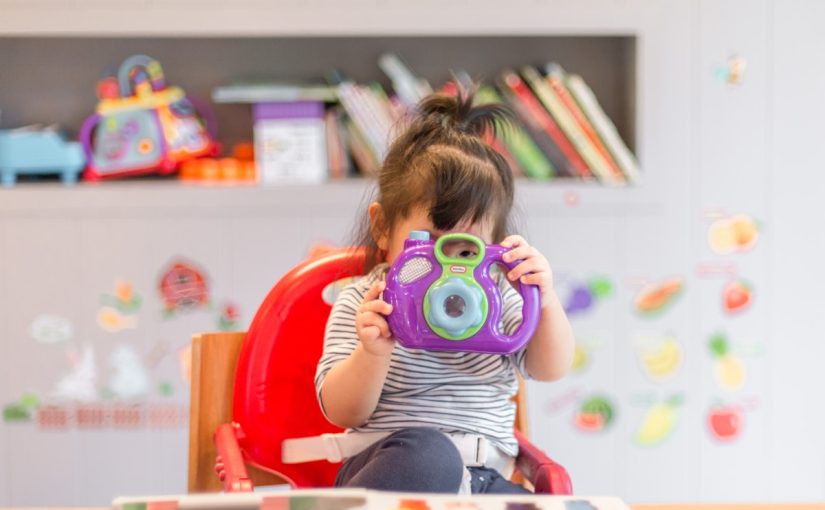
When parents and children explore mathematics together, both discover new ways of thinking and strengthen their relationship.
Breaking the Cycle of Mathematical Anxiety Across Generations
One of the most important contributions of the Math Kangaroo parent-child partnership is its potential to break the intergenerational transmission of mathematical anxiety. Mathematical anxiety is not genetically inherited; it is culturally transmitted. Children learn to be anxious about mathematics from observing anxious adults, from hearing negative comments about mathematics, and from experiencing pressure and judgment in mathematical contexts. The parent-child mathematical partnership that Math Kangaroo facilitates intervenes in this transmission process at multiple points.
First, parents who engage with Math Kangaroo problems alongside their children experience mathematics in a positive, low-pressure context, which can begin to heal their own mathematical anxiety. Solving an interesting puzzle with their child is a fundamentally different experience from the timed tests and red marks that may have characterized their own school mathematics experience. Over time, these positive experiences can reshape a parent’s relationship with mathematics, replacing anxiety with curiosity and confidence.
Second, children who experience mathematics as a shared, positive activity with their parents develop a fundamentally different set of emotional associations with the subject. Mathematics is not a lonely, high-stakes performance; it is a game they play with people they love. These positive emotional associations are powerful protective factors against the development of mathematical anxiety, and they persist even when children encounter the more pressured and competitive aspects of school mathematics.
Third, the parent-child mathematical partnership models a growth mindset and a healthy relationship with challenge. When children see their parents working through a difficult problem, making mistakes, trying different approaches, and eventually succeeding, they learn that struggle is a normal and valuable part of mathematical thinking. This modeling is far more powerful than any explicit instruction about growth mindset, because it shows children what resilient mathematical thinking actually looks like in practice.
The Family That Solves Together: Building a Mathematical Culture at Home
The parent-child mathematical partnership that Math Kangaroo fosters extends beyond the competition itself to create a broader mathematical culture within the family. Families that have developed the habit of mathematical engagement through Math Kangaroo find that mathematics becomes a natural part of family life. Mathematical puzzles become a topic of dinner conversation. Interesting patterns noticed during a walk become an opportunity for shared exploration. A news story about statistics becomes a launching point for a family discussion about numbers and meaning.
This integration of mathematical thinking into everyday family life is one of the most powerful ways to support children’s mathematical development. Research has shown that the amount of mathematical talk in the home, the frequency with which numbers, patterns, and quantitative reasoning appear in family conversations, is a strong predictor of children’s mathematical achievement. Math Kangaroo provides a structured entry point into this kind of family mathematical culture, helping families who might not naturally engage in mathematical talk to develop the habit in a way that feels natural and enjoyable.
The family mathematical culture also communicates values to children in a way that is more powerful than any explicit lesson. When mathematics is a regular part of family life, children learn that mathematical thinking is valued, that it is something that the important adults in their lives take seriously and enjoy. This implicit message, absorbed through years of shared experience, is far more influential than any single conversation about the importance of mathematics for future careers. It shapes children’s identity, their sense of who they are and what they care about, in a way that supports lifelong mathematical engagement.
A mathematically rich home environment is not about expensive resources but about the shared joy of exploration and discovery.
Practical Strategies for Building the Parent-Child Mathematical Partnership
Parents who wish to build a stronger mathematical partnership with their children can draw on the same principles that make Math Kangaroo effective. The most important principle is to approach mathematical engagement as a shared journey of exploration rather than as a teaching relationship. When parents position themselves as fellow learners rather than as experts, the dynamic shifts from instruction to collaboration, and the child’s engagement and motivation increase dramatically.
Regular, low-pressure engagement is far more effective than occasional intense sessions. Setting aside a consistent time each week to work on Math Kangaroo problems together, perhaps a Sunday afternoon with a pot of tea and a few past competition papers, creates a routine that children look forward to and that becomes a cherished family tradition. The key is to prioritize the experience of thinking together over the goal of getting right answers. The conversation, the shared struggle, the joint celebration of insight, these are the real rewards of the activity, and they are available regardless of whether every problem is solved correctly.
It is also important for parents to be authentic about their own mathematical thinking. When parents share their genuine thought processes, their strategies, their confusions, their moments of insight, and their mistakes, they model the kind of mathematical thinking that leads to deep understanding. Pretending to know all the answers is counterproductive; it reinforces the child’s belief that mathematics is about already knowing rather than about figuring out. Admitting uncertainty and demonstrating the process of working through it is far more valuable, both for the child’s mathematical development and for the parent-child relationship.
Finally, parents should celebrate effort, strategy, and insight, not just correct answers. When a child persists through a difficult problem, tries a creative approach, or experiences a moment of understanding, those achievements deserve recognition regardless of whether the final answer is right. This focus on process over product communicates that mathematical thinking is a journey of growth and discovery, not a test of fixed ability, and it creates the psychological safety that allows children to take intellectual risks and develop genuine mathematical confidence.
The Enduring Gift of Shared Mathematical Exploration
The parent-child mathematical partnership that Math Kangaroo facilitates is one of the most enduring gifts that families can give each other. Long after the competition is over, the shared memories of wrestling with puzzles, of celebrating insights, and of discovering mathematical beauty together remain. These memories are not just warm moments of family connection; they are foundational experiences that shape children’s relationship with mathematics, with learning, and with their own intellectual capacities.
For parents, the experience of re-engaging with mathematics alongside their children can be transformative. Many parents discover, through Math Kangaroo, that they are capable of mathematical thinking that they never believed possible. They discover that mathematics can be beautiful, satisfying, and even fun. They discover that their children are more creative and capable thinkers than they realized. And they discover that the parent-child relationship can be deepened and enriched by the shared pursuit of intellectual challenges.
In a world that increasingly pulls families apart, that fills schedules with individual activities and screens with individual attention, the shared experience of mathematical exploration is a precious counterforce. It brings families together around something that is genuinely meaningful, that develops valuable capacities in both parent and child, and that creates bonds of shared understanding that last a lifetime. Math Kangaroo, by making this experience accessible to families everywhere, does not merely promote mathematical achievement; it strengthens the family relationships that are the foundation of children’s well-being and success.