When most people think about mathematics, they picture numbers, equations, and algebraic formulas. However, a significant portion of mathematical thinking has nothing to do with numbers at all. Spatial reasoning, the ability to visualize, manipulate, and reason about shapes, patterns, and three-dimensional objects, is one of the most powerful and underappreciated dimensions of mathematical thought. It is the kind of thinking that allows an architect to imagine how a building will look before it is constructed, that enables a surgeon to navigate the interior of the human body, and that helps an engineer design components that fit together precisely.
Math Kangaroo, the world’s largest international mathematics competition, places a remarkably strong emphasis on spatial reasoning. Across all grade levels, from Level 1 (grades 1–2) through Level 12 (grades 11–12), students encounter problems that require them to rotate shapes in their minds, identify patterns in visual sequences, fold and unfold geometric figures, and reason about spatial relationships. This emphasis is not accidental; it reflects a deep understanding of how mathematical thinking actually works and what children need in order to develop truly robust mathematical minds.
In this article, we explore the vital role that spatial reasoning plays in Math Kangaroo, how the competition systematically develops visual-spatial thinking skills, and why these skills matter far beyond the competition itself, influencing success in science, technology, engineering, art, and everyday life.
What Is Spatial Reasoning and Why Does It Matter?
Spatial reasoning, sometimes called spatial thinking or visual-spatial ability, refers to the capacity to understand, reason about, and remember the spatial relationships among objects. It encompasses a wide range of cognitive skills, including the ability to recognize shapes and their properties, mentally rotate objects, understand how two-dimensional representations correspond to three-dimensional objects, identify patterns and symmetries, navigate and orient oneself in space, and visualize transformations such as folding, cutting, and assembling.
Research in cognitive science and education has consistently shown that spatial reasoning is one of the strongest predictors of future success in STEM fields. A landmark study published in the journal Science found that spatial ability in adolescence was a better predictor of later creative and scholarly accomplishments in STEM than either mathematical or verbal ability. This finding has profound implications for education: if we want to develop the next generation of scientists, engineers, and innovators, we must pay serious attention to spatial thinking from an early age.
Yet spatial reasoning is often neglected in traditional mathematics curricula. Many school programs focus heavily on arithmetic, algebra, and procedural computation, leaving little room for the geometric and spatial exploration that develops these crucial cognitive capacities. Math Kangaroo fills this gap beautifully. By embedding spatial reasoning challenges throughout its problems, the competition ensures that students develop these skills in an engaging, low-pressure environment that rewards creative thinking over rote memorization.
How Math Kangaroo Develops Spatial Reasoning Across Grade Levels
One of the most remarkable features of Math Kangaroo is how its spatial reasoning challenges evolve with the student’s developmental stage. At the earliest levels, problems introduce young children to basic spatial concepts through playful, concrete scenarios. A first-grader might be asked to identify which shape completes a pattern, determine how a folded piece of paper will look when unfolded, or figure out which direction a figure will face after being rotated. These problems are accessible and fun, but they plant the seeds of sophisticated spatial thinking.
As students progress to the middle grades, the spatial reasoning challenges become more complex and abstract. Students might encounter problems involving the net of a three-dimensional solid, asking them to determine which faces will be adjacent when a flat pattern is folded into a cube. They might be asked to count the number of smaller cubes visible from different perspectives of a stacked arrangement, or to determine the cross-section that results from slicing a geometric solid with a plane. These problems require students to hold multiple spatial relationships in mind simultaneously and to reason about transformations they cannot physically perform.
At the upper levels, spatial reasoning problems can become genuinely challenging, involving three-dimensional coordinate geometry, complex rotations and reflections, combinatorial geometry, and problems that require students to reason about spatial configurations in four or more dimensions. A high school student might be asked to determine how many regions a set of intersecting planes divides a cube into, or to find the shortest path along the surface of a polyhedron between two points. These problems demand a mature spatial imagination and the ability to reason rigorously about geometric structures.
Key Types of Spatial Reasoning Problems in Math Kangaroo
The spatial reasoning problems in Math Kangaroo can be broadly categorized into several types, each targeting a different aspect of visual-spatial thinking. Understanding these categories helps parents and educators appreciate the breadth of spatial skills the competition develops.
Mental Rotation and Transformation. Many Math Kangaroo problems ask students to imagine what a shape will look like after being rotated, reflected, or translated. A student might see a figure composed of several connected squares and be asked which of several options shows the same figure after a 90-degree rotation. These problems develop the ability to mentally manipulate objects, a skill that is essential in fields ranging from surgery to computer graphics. Research has shown that mental rotation ability is highly trainable, and regular practice with problems like those found in Math Kangaroo can produce significant and lasting improvements.
Folding, Cutting, and Unfolding. A classic category of Math Kangaroo spatial problems involves folding paper, cutting holes, and then predicting what the unfolded result will look like. These problems require students to track multiple layers of paper, understand how cuts propagate through folds, and reverse the folding process mentally. They develop an intuitive understanding of symmetry, transformation, and the relationship between two-dimensional and three-dimensional representations. Similar problems appear in architecture, origami engineering, and manufacturing design.
Nets and Three-Dimensional Solids. Students are frequently asked to work with nets, the two-dimensional patterns that can be folded into three-dimensional shapes. A typical problem might show several different arrangements of six squares and ask which ones can be folded into a cube. More advanced versions ask students to determine which faces of a folded solid will be opposite each other, or to identify which three-dimensional shape corresponds to a given net. These problems build a deep understanding of the relationship between flat and solid geometry, a foundation that is critical for engineering design, packaging, and three-dimensional modeling.
Pattern Recognition and Visual Sequences. Many Math Kangaroo problems present visual patterns and ask students to identify the rule governing the sequence and predict the next element. These patterns might involve shapes that change in size, rotation, color, or position according to a consistent rule. Solving these problems requires students to observe carefully, hypothesize about underlying rules, and test their hypotheses against the given examples. This process mirrors the scientific method and develops the analytical observation skills that are fundamental to all forms of inquiry.
Counting and Combinatorial Geometry. Some spatial reasoning problems combine visual perception with counting and combinatorial thinking. Students might be asked to count the number of triangles in a complex figure, determine how many different shapes can be formed by connecting dots on a grid, or figure out how many unit cubes are needed to build a given three-dimensional structure. These problems develop the ability to organize spatial information systematically and to apply logical counting strategies to geometric contexts.
The Neuroscience Behind Spatial Reasoning Development
The development of spatial reasoning skills is deeply connected to brain development and neuroplasticity. Neuroimaging studies have shown that spatial reasoning activates a network of brain regions including the parietal cortex, which processes spatial information, the prefrontal cortex, which supports working memory and planning, and the hippocampus, which is involved in spatial navigation and memory formation. When children engage in spatial reasoning activities, they strengthen the neural connections among these regions, building a more integrated and efficient spatial thinking system.
Critically, research has demonstrated that spatial reasoning abilities are not fixed at birth. Unlike some cognitive capacities that are largely determined by genetics, spatial skills respond strongly to training and practice. A comprehensive meta-analysis published in Psychological Bulletin found that spatial training programs produced substantial improvements in spatial performance, and that these gains transferred to new types of spatial tasks and persisted over time. This means that every Math Kangaroo problem a student works on is literally reshaping their brain, building stronger neural pathways for spatial thinking that will serve them throughout their lives.
The timing of spatial reasoning development is also important. Research suggests that there are sensitive periods during childhood when spatial skills are particularly responsive to stimulation and practice. Children who are exposed to rich spatial experiences, puzzles, building activities, and geometric exploration, during these periods develop stronger spatial abilities than those who are not. Math Kangaroo, with its engaging and age-appropriate spatial challenges, provides exactly the kind of stimulation that developing brains need during these critical windows.
Spatial Reasoning Beyond the Competition: Real-World Applications
The spatial reasoning skills that Math Kangaroo develops have far-reaching applications beyond the competition itself. In architecture and engineering, professionals must constantly visualize three-dimensional structures, reason about spatial relationships, and translate between two-dimensional plans and three-dimensional realities. The ability to look at a blueprint and imagine the finished building, or to examine a three-dimensional model and identify potential structural issues, depends directly on the kind of spatial thinking that Math Kangaroo cultivates.
In medicine, spatial reasoning is essential for understanding anatomy, interpreting medical images such as X-rays, CT scans, and MRIs, and planning surgical procedures. Surgeons, in particular, rely heavily on spatial abilities to navigate the complex three-dimensional landscape of the human body. Studies have shown that medical students with stronger spatial skills perform better in anatomy courses and surgical training. The mental rotation and visualization skills that Math Kangaroo develops in young students lay the groundwork for these professional capabilities.
In technology and computer science, spatial reasoning underpins fields such as computer graphics, user interface design, game development, robotics, and artificial intelligence. Programmers who design three-dimensional environments, create visual effects, or develop autonomous navigation systems all rely on spatial thinking. Even in data science, the ability to visualize multidimensional data sets and perceive patterns in visual representations is a form of spatial reasoning that Math Kangaroo helps to develop.
In the arts, spatial reasoning is fundamental to drawing, painting, sculpture, photography, and design. Artists must understand perspective, proportion, composition, and the spatial relationships among visual elements. The geometric thinking that Math Kangaroo fosters complements and enriches artistic development, supporting the kind of creative visual thinking that produces powerful works of art.
Supporting Spatial Reasoning Development at Home and in School
Parents and educators who want to support the development of spatial reasoning skills can draw on the same principles that make Math Kangaroo effective. The key is to provide regular, engaging opportunities for children to think spatially in a variety of contexts.
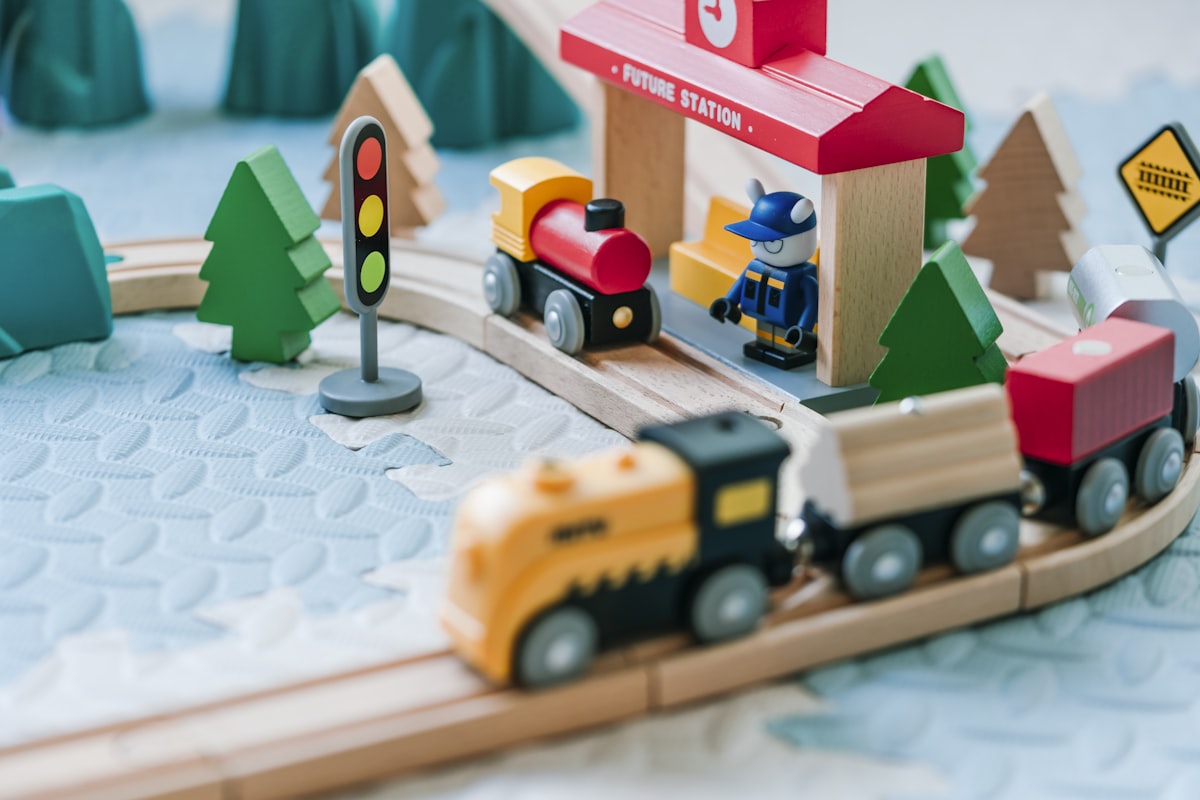
Physical manipulation of objects is one of the most powerful ways to build spatial skills. Building with blocks, assembling models, working with tangrams, solving jigsaw puzzles, and constructing with materials like LEGO all provide hands-on spatial experiences that develop the mental manipulation abilities that Math Kangaroo assesses. These activities are most effective when children are encouraged to plan their constructions in advance, visualize the finished product, and reflect on the spatial decisions they made.
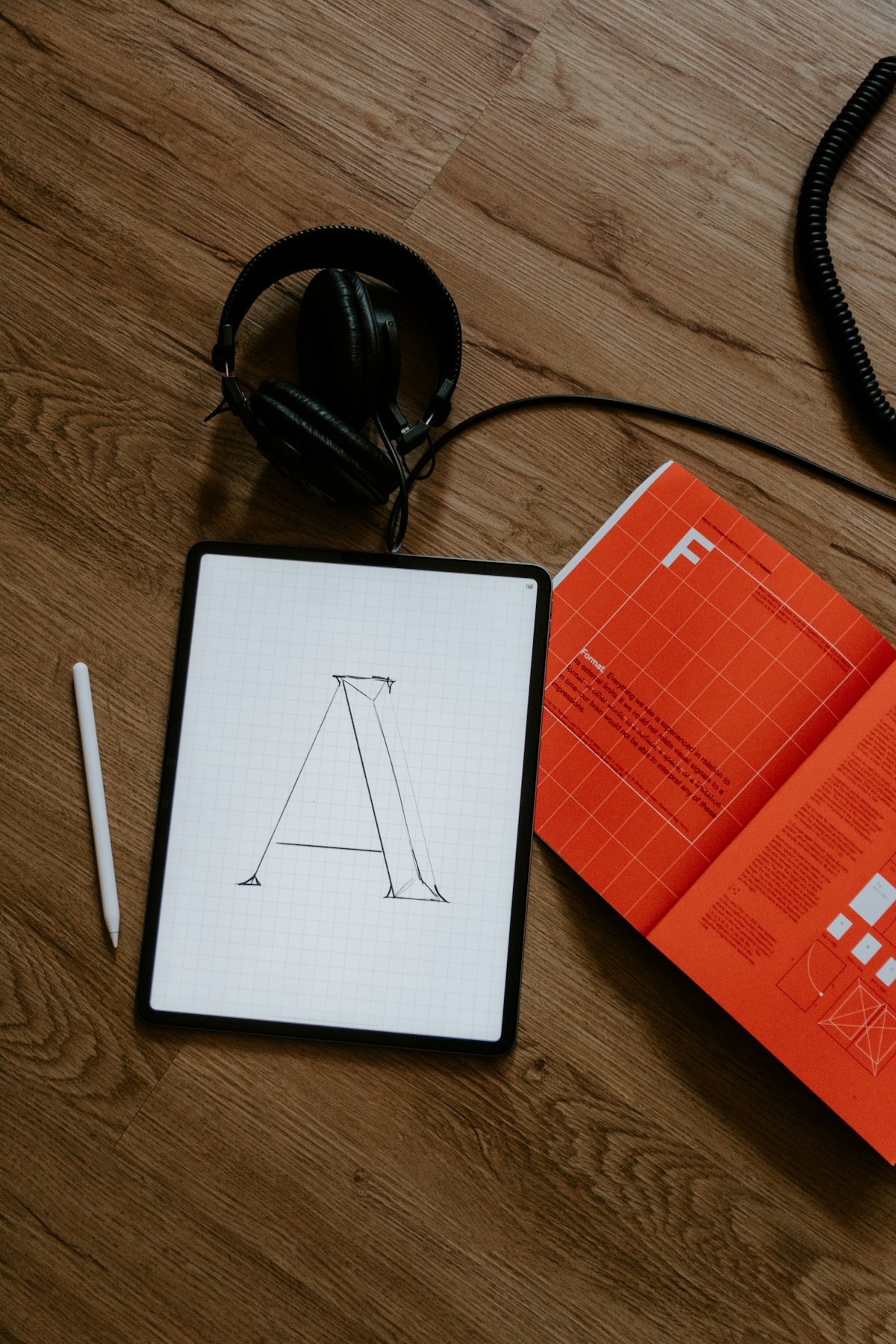
Drawing and sketching also support spatial development. When children draw three-dimensional objects on a two-dimensional surface, they are engaging in exactly the kind of spatial translation that Math Kangaroo problems require. Encouraging children to sketch buildings, objects, and scenes from different perspectives helps them develop the ability to represent and reason about spatial relationships graphically.
Spatial language plays a surprisingly important role in spatial development. Research has shown that children who hear and use more spatial words, terms like above, below, beside, between, curved, straight, symmetrical, parallel, and perpendicular, develop stronger spatial reasoning skills. Parents and teachers can support spatial thinking by incorporating rich spatial vocabulary into everyday conversations and by encouraging children to describe spatial relationships precisely.
Most importantly, the attitude toward spatial challenges matters enormously. Children who believe that spatial ability is a fixed trait, that you are either naturally good at it or you are not, tend to avoid spatial challenges and miss opportunities for growth. Math Kangaroo’s emphasis on creative problem-solving, its celebration of diverse approaches, and its low-pressure format all help children develop a growth mindset toward spatial thinking. When children see spatial challenges as opportunities to think creatively rather than as tests of innate ability, they engage more deeply and develop more rapidly.
The Deeper Vision: Spatial Reasoning as a Window into Mathematical Beauty
Beyond its practical applications, spatial reasoning connects students to one of the deepest and most beautiful dimensions of mathematics. Geometry, the mathematics of space and shape, has captivated human minds for thousands of years, from the ancient Greeks who proved theorems about triangles and circles to the modern mathematicians who explore the geometry of curved spaces and higher dimensions. The spatial reasoning problems in Math Kangaroo are small windows into this vast and beautiful landscape.
When a student discovers that exactly eleven distinct nets can be folded into a cube, they are touching a mathematical truth that has been known for centuries but never loses its power to surprise. When a student realizes that a flat piece of paper can be folded into a three-dimensional crane, they are experiencing the magic of geometric transformation. When a student sees how a simple rule of rotation generates a complex and beautiful pattern, they are glimpsing the deep connection between mathematics and art that has inspired creators throughout human history.
Math Kangaroo, by weaving spatial reasoning throughout its problems, invites students into this world of geometric beauty and discovery. It shows them that mathematics is not merely a tool for calculation but a way of seeing, understanding, and creating. The spatial thinking skills that students develop through the competition enrich not only their mathematical abilities but their capacity to perceive, appreciate, and shape the world around them.
In a world that increasingly demands the ability to think visually, to navigate complex spatial environments, and to translate between abstract representations and concrete realities, the spatial reasoning skills that Math Kangaroo cultivates are more valuable than ever. Every problem a student solves, every shape they rotate in their mind, every net they fold into a solid, builds a stronger foundation for a lifetime of spatial thinking, creative problem-solving, and mathematical wonder.