How many ways can you arrange the letters in a word? How many different outfits can you create from a set of shirts and pants? How many handshakes occur when everyone in a room greets everyone else? These questions, deceptively simple in their phrasing, open the door to one of the most beautiful and practically important branches of mathematics: combinatorics, the art of counting, organizing, and enumerating possibilities. Combinatorial thinking is not merely about arriving at a number; it is about developing systematic strategies for exploring all the possibilities in a structured way, ensuring that nothing is missed and nothing is counted twice.
Math Kangaroo, the international mathematics competition, is one of the most effective vehicles for developing combinatorial thinking in young students. Across every grade level, the competition features problems that ask students to count arrangements, enumerate possibilities, organize information systematically, and reason about the structure of counting problems. These problems do not require advanced formulas or memorized techniques; they require clear thinking, careful organization, and the willingness to explore a problem space methodically. In developing these capacities, Math Kangaroo builds a form of mathematical thinking that is invaluable not only in mathematics but in computer science, probability, logistics, and countless real-world decision-making contexts.
This article explores the role of combinatorial thinking in Math Kangaroo, examines how the competition develops this crucial skill across grade levels, and considers why the ability to count and organize systematically is one of the most transferable cognitive skills that mathematical education can provide.
What Is Combinatorial Thinking and Why Does It Matter?
Combinatorial thinking is the capacity to reason systematically about collections, arrangements, and possibilities. It encompasses several interrelated skills: the ability to enumerate all possibilities in an organized way, the capacity to count without omission or duplication, the skill of recognizing when order matters and when it does not, the ability to break complex counting problems into manageable cases, and the insight to identify structural patterns that simplify counting. A student who can determine how many three-digit numbers can be formed from a given set of digits, or how many ways a committee can be chosen from a group of people, is exercising combinatorial thinking.
The importance of combinatorial thinking extends far beyond the mathematics classroom. In computer science, combinatorics is fundamental to algorithm design, data structures, cryptography, and complexity analysis. Every time a programmer considers how many possible inputs a function might receive, how many paths a search algorithm might explore, or how many ways data can be arranged, they are thinking combinatorially. In probability, combinatorial counting is the foundation for determining the likelihood of events; to compute the probability of drawing a particular hand of cards, one must first count how many possible hands exist. In operations research and logistics, combinatorial optimization, finding the best arrangement or route among many possibilities, is central to efficient planning and resource allocation.
Yet combinatorial thinking is often underrepresented in traditional school curricula, which tend to emphasize arithmetic computation and algebraic manipulation over systematic enumeration and organizational reasoning. Math Kangaroo fills this gap beautifully. By presenting combinatorial challenges that are accessible, engaging, and progressively more sophisticated, the competition ensures that students develop these crucial skills in a natural and enjoyable way, building a foundation that serves them throughout their mathematical and professional lives.
How Math Kangaroo Develops Combinatorial Thinking Across Grade Levels
The combinatorial thinking challenges in Math Kangaroo evolve elegantly with students’ cognitive development, introducing increasingly sophisticated forms of counting and organizational reasoning in an age-appropriate manner.
At the earliest levels, combinatorial problems are concrete and visual. A first-grade student might be asked to count how many different towers can be built using two red blocks and one blue block, or to determine how many ways three friends can stand in a line for a photograph. These problems introduce the fundamental combinatorial idea that the same set of objects can be arranged in multiple distinct ways, and they develop the habit of enumerating possibilities carefully rather than guessing. The problems are accessible and fun, but they plant the seeds of systematic counting that will grow into sophisticated combinatorial reasoning.
In the middle grades, combinatorial problems become more abstract and structured. Students encounter problems involving the multiplication principle, where the total number of outcomes is found by multiplying the number of choices at each stage. They work with problems that require distinguishing between permutations, where order matters, and combinations, where it does not. They learn to organize their counting using systematic strategies: fixing one element and varying the others, breaking a problem into cases, or using complementary counting to find the number of desired outcomes by subtracting unwanted ones from the total. These problems develop the organizational discipline that is the hallmark of strong combinatorial thinking.
At the upper levels, combinatorial problems can become genuinely challenging, involving recursive counting, the pigeonhole principle, inclusion-exclusion, and combinatorial proofs. A high school student might be asked to count the number of subsets of a set with a particular property, to determine how many paths exist through a grid subject to certain constraints, or to prove that a particular configuration must exist among a collection of objects. These problems require not only computational skill but deep structural insight, the ability to see the hidden organization within a counting problem and to exploit it for an elegant solution.

Key Forms of Combinatorial Thinking in Math Kangaroo
The combinatorial thinking challenges in Math Kangaroo span several distinct but interconnected forms of reasoning. Understanding these forms reveals the breadth of combinatorial skill that the competition develops.
Systematic Enumeration. The most fundamental combinatorial skill is the ability to list all possibilities in an organized way that ensures completeness and avoids duplication. Math Kangaroo problems at every level reward students who approach counting systematically rather than haphazardly. A student who counts the number of two-digit numbers with a particular property by listing them in order, or who determines the number of possible outcomes by constructing a tree diagram, is practicing the discipline of systematic enumeration. This skill is foundational not only for combinatorics but for any domain that requires careful and complete exploration of a space of possibilities.
The Multiplication Principle. One of the most powerful and frequently used combinatorial ideas is the multiplication principle: if one choice can be made in m ways and a subsequent independent choice can be made in n ways, then the two choices together can be made in m times n ways. Math Kangaroo problems frequently require students to apply this principle, from simple outfit-counting problems at the lower levels to complex multi-stage counting problems at the upper levels. Mastering the multiplication principle is a crucial step in combinatorial development, as it transforms counting from a tedious enumeration into an efficient and elegant calculation.
Permutations and Combinations. A central distinction in combinatorics is between permutations, arrangements in which order matters, and combinations, selections in which order does not matter. Math Kangaroo problems help students develop an intuitive understanding of this distinction long before they encounter the formal formulas. A problem might ask how many ways a president, vice president, and treasurer can be chosen from a group, a permutation problem, and then how many ways a three-person committee can be chosen from the same group, a combination problem. By experiencing both types of problems, students develop a deep understanding of when order matters and how that affects the counting.
Case Analysis and Complementary Counting. Many Math Kangaroo combinatorial problems are most effectively solved by breaking the problem into cases or by counting the complement. A student asked to count the number of outcomes that satisfy a particular condition might find it easier to count all outcomes and subtract those that do not satisfy the condition. This strategy, known as complementary counting, is a powerful combinatorial tool that Math Kangaroo introduces naturally through problem-solving. Similarly, the habit of breaking a complex counting problem into mutually exclusive cases, counting each case separately, and summing the results is a fundamental organizational strategy that the competition develops systematically.
Combinatorial Thinking and the Development of Organizational Discipline
One of the most valuable byproducts of combinatorial thinking is the development of organizational discipline: the habit of approaching complex problems in a structured, systematic, and thorough way. This habit is cultivated naturally by Math Kangaroo’s combinatorial problems, which reward careful organization and punish haphazard guessing.
When a student encounters a counting problem, the first challenge is not computation but organization: how will I explore the possibilities in a way that ensures I find them all and count each one exactly once? Answering this question requires the student to devise a strategy, to impose structure on the problem, and to execute that structure consistently. Over time, this practice develops a general cognitive discipline that transfers to every area of intellectual work. Students who have practiced systematic enumeration become better at organizing information, planning multi-step processes, and ensuring the completeness of their analyses in any domain.
This organizational discipline is particularly valuable in the age of information, where the ability to structure and navigate complex spaces of possibilities is increasingly important. Whether a student is designing an experiment, debugging a computer program, planning a project, or making a complex decision, the capacity to enumerate options systematically, to consider cases exhaustively, and to organize information clearly is a decisive advantage. Math Kangaroo, by developing this capacity from an early age, equips students with a cognitive tool that is relevant to virtually every form of complex thinking they will encounter.

Combinatorial Thinking Beyond Mathematics: Real-World Applications
The combinatorial thinking skills that Math Kangaroo develops have extensive applications far beyond the mathematics classroom. In computer science, combinatorics is the foundation of algorithm design and analysis. When a programmer determines how many operations an algorithm will perform, how many possible solutions a search procedure must consider, or how many ways data can be encrypted, they are applying combinatorial reasoning. The systematic enumeration and organizational skills that Math Kangaroo develops are directly applicable to the design and analysis of efficient algorithms.
In probability and statistics, combinatorial counting is essential for determining the likelihood of events. The probability of an event is defined as the ratio of favorable outcomes to total outcomes, and computing both quantities requires combinatorial counting. A student who understands how to count arrangements and selections systematically is well prepared to reason about probability, a skill that is increasingly important in fields ranging from medicine and finance to machine learning and artificial intelligence.
In everyday life, combinatorial thinking informs countless decisions. Choosing a meal from a menu with multiple courses, determining how many different routes are available for a journey, figuring out how many ways a group of friends can be seated at a table, all involve combinatorial reasoning. The habit of thinking systematically about possibilities, cultivated through Math Kangaroo, makes these everyday decisions easier and more accurate, and it develops a general orientation toward careful and thorough thinking that serves students throughout their lives.
Supporting Combinatorial Thinking Development at Home and in School
Parents and educators who wish to support the development of combinatorial thinking have many natural and enjoyable avenues available. The most important principle is to encourage children to think about possibilities systematically and to celebrate careful organization over quick answers.
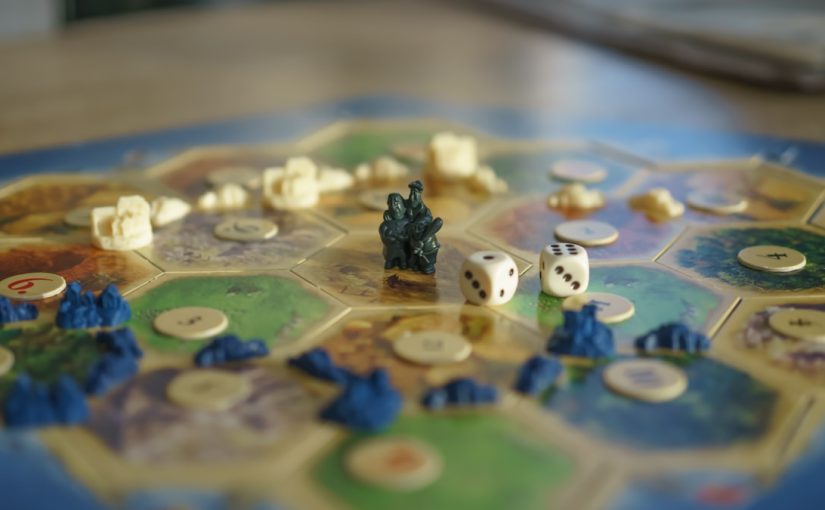
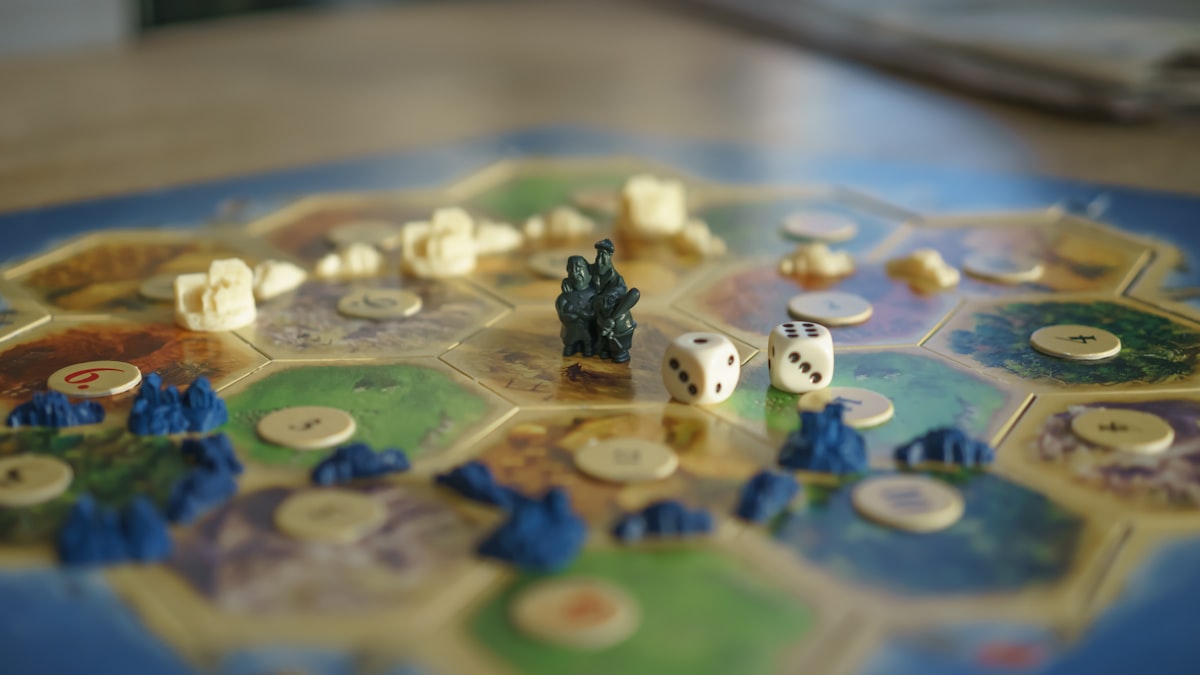
Games and puzzles provide rich opportunities for combinatorial thinking. Strategy games that involve considering multiple possible moves, card games that involve counting and probability, and puzzles that require exploring different arrangements all develop combinatorial skills in an engaging context. Building with blocks or arranging objects in different configurations provides hands-on experience with the idea that the same set of items can be organized in multiple distinct ways. The key is to encourage children to count the possibilities systematically and to reflect on whether they have found them all.
Everyday situations also offer natural combinatorial challenges. Planning a meal with multiple courses, choosing outfits from a wardrobe, arranging books on a shelf, or determining how many ways a group can be divided into teams all invite combinatorial thinking. Encouraging children to count these possibilities carefully, and to explain their counting strategy, transforms ordinary activities into rich mathematical experiences. Math Kangaroo, with its emphasis on systematic enumeration and organizational reasoning, models exactly this approach to counting and possibility.
Above all, the development of combinatorial thinking requires patience and a willingness to value thoroughness over speed. A child who takes the time to enumerate all possibilities carefully, rather than guessing or counting haphazardly, is building a far stronger foundation than one who rushes to an answer. Math Kangaroo’s thoughtful problem design rewards this kind of careful and systematic thinking, and in doing so, it helps students develop the organizational discipline and combinatorial insight that are the true foundations of mathematical and computational expertise.